

Snake Plant
Dracaena trifasciata
low lightpet cautionToxic to pets
15 October 2026
Every first-time plant owner has the same worry: "Will I kill it?" The good news is that some houseplants are genuinely forgiving. They tolerate irregular watering, imperfect light, and the occasional week of neglect — which makes them ideal for learning the basics before moving on to fussier species like calathea or fiddle-leaf fig.
A good beginner plant usually has three things in common: it stores water in thick leaves, stems, or roots (so a missed watering is not a disaster), it adapts to a range of light levels, and it does not need constant humidity. Every plant below ticks at least two of those boxes. For a wider selection, browse the full Beginner Friendly Plants category.
Snake plant (Dracaena trifasciata) is the classic "can't kill it" plant. Its upright, sword-shaped leaves store water, so it is happy with watering every two to three weeks, and it copes with anything from a dim corner to a bright window. Overwatering is its only real enemy. Mildly toxic to pets.
ZZ plant grows from a thick underground rhizome that stores water, letting it ride out weeks of drought. Glossy, deep-green leaves look polished with almost no effort. It tolerates low light, though growth is slower there. Toxic to pets if chewed.
Pothos — widely sold in India as money plant — is a fast, trailing vine that droops visibly when thirsty and perks up within hours of watering, so it tells you exactly when it needs attention. It grows in soil or a jar of water. Try the neon or silver satin varieties for a different look. Toxic to pets.
Spider plant produces arching green-and-white leaves and, once established, dangling baby plantlets you can pot up for free. It prefers bright indirect light and evenly moist soil, but forgives lapses. It is one of the few popular options considered safe for cats and dogs.
Aloe vera is a succulent, so it wants bright light and very little water — roughly every two to three weeks, only when the soil is completely dry. A sunny windowsill suits it. The gel is useful for minor skin irritation, but the plant is toxic to pets if eaten.
Peace lily is one of the easiest ways to learn when to water: its leaves collapse dramatically when the soil is dry and recover quickly after a drink. It copes with lower light and may produce white blooms. Toxic to pets.
Rubber plant gives you a bold, tree-like look with large glossy leaves. Give it bright indirect light and water once the top few centimetres of soil are dry. Wipe the leaves occasionally to keep them glossy. The latex sap can irritate skin and is mildly toxic to pets.
Jade plant has thick, water-storing leaves and a miniature-tree shape that gets more characterful with age. Give it plenty of bright light and let the soil dry fully between waterings. Toxic to cats and dogs.
Chinese evergreen offers silver- and green-patterned foliage and tolerates low to medium light and dry spells. Plain green and silver forms handle dim rooms better than the colourful pink hybrids. Toxic to pets.
Cast iron plant earns its name by surviving deep shade, irregular watering, and temperature swings. It grows slowly, but it is exceptionally tough — and it is considered non-toxic to cats and dogs.
Snake plant and ZZ plant are the most forgiving. Both store water, tolerate low light, and thrive on neglect — they are far more likely to be harmed by too much care than too little.
Succulents and water-storing plants — snake plant, ZZ plant, aloe vera, and jade plant — can often go two to three weeks between waterings, depending on season and light.
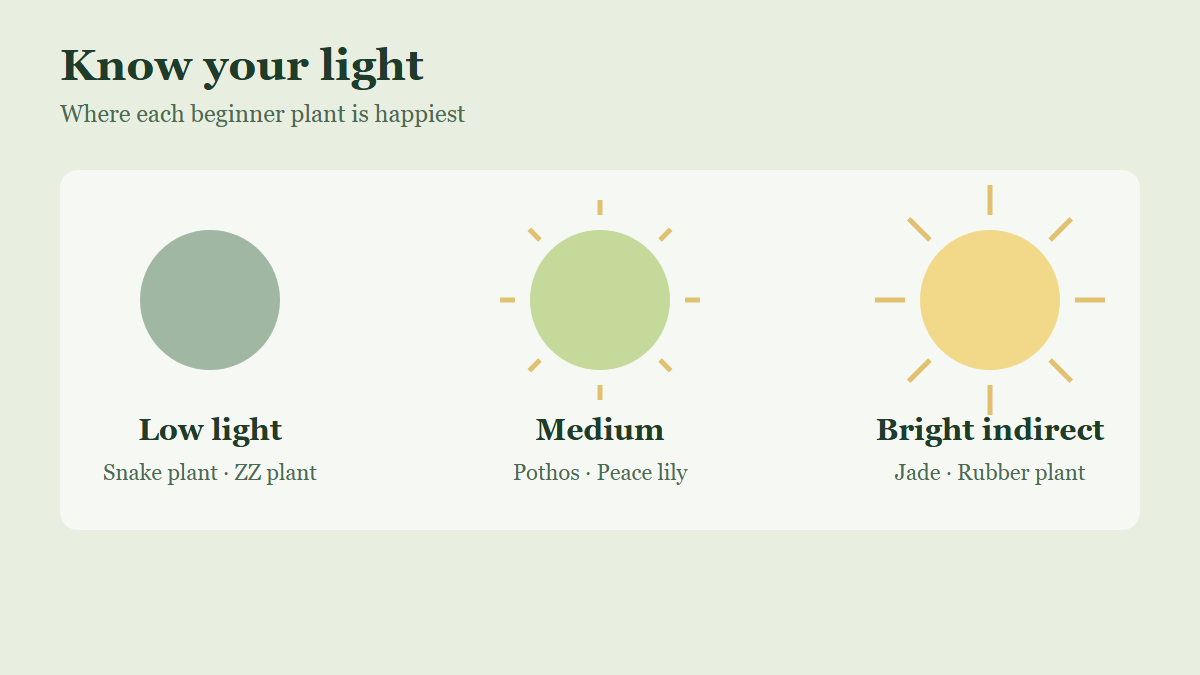
Snake plant, ZZ plant, cast iron plant, pothos, and peace lily all cope with low light. Growth will be slower, so water less often than you would in a bright room.
Not all of them. Spider plant and cast iron plant are generally considered pet-safe, while snake plant, pothos, ZZ plant, peace lily, aloe vera, and jade plant are toxic if eaten. Check each plant's page before bringing it home if you have pets.
Start with one or two plants that match the light in your home, learn their rhythm, then expand. When you are ready for more, browse the full plant category list or search for a specific plant to read its complete care guide.

